Checking the availability of your search
WITHOUT INTERMEDIARIES
THE BEST PRICE, GUARANTEED
100% SECURE BOOKING
PERSONALIZED ATTENTION
DISCOVER What to see in Noja
The Victoria Marsh
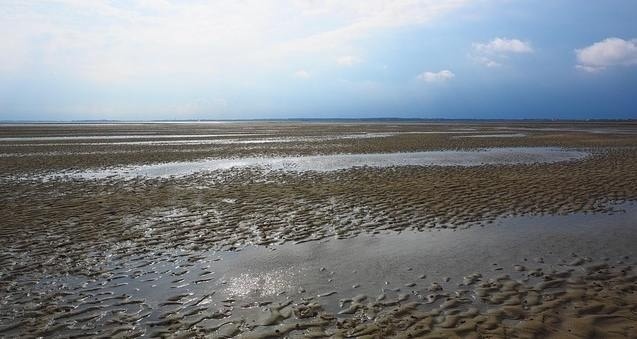
Victoria Marsh is situated behind Trengandín Beach between the Helgueras and Noja areas. Previously the marsh was connected constantly to the sea via a channel that was much larger than it currently is. Subsequent filling of the area behind it and to the sides made it lose its water capacity. Within the Marismas de Santoña y Noja Natural Park, it is the largest expanse of reeds, which makes it a popular nesting ground for many birds.
To observe this ecosystem up close head to the side by the road linking the Helgueras area with Argoños. Here, an old tide mill acts as observatory. Tide mills, via a system of walls, trapped the water that rose with the tides. When the tides went out, the water stored inside was poured into the sea again via a small door. This made a series of wheels and gears move, which brought the hammers of the mill to life to grind grain, mainly corn.
Ris Beach
This beach of fine golden sand is suitable for surfing the waves due to its orientation to the north. It stretches for over two kilometres and it has good access and infrastructure. Its services include lifeguards, pedestrian and wheelchair access, parking, showers and fountains...
Trengandín Beach
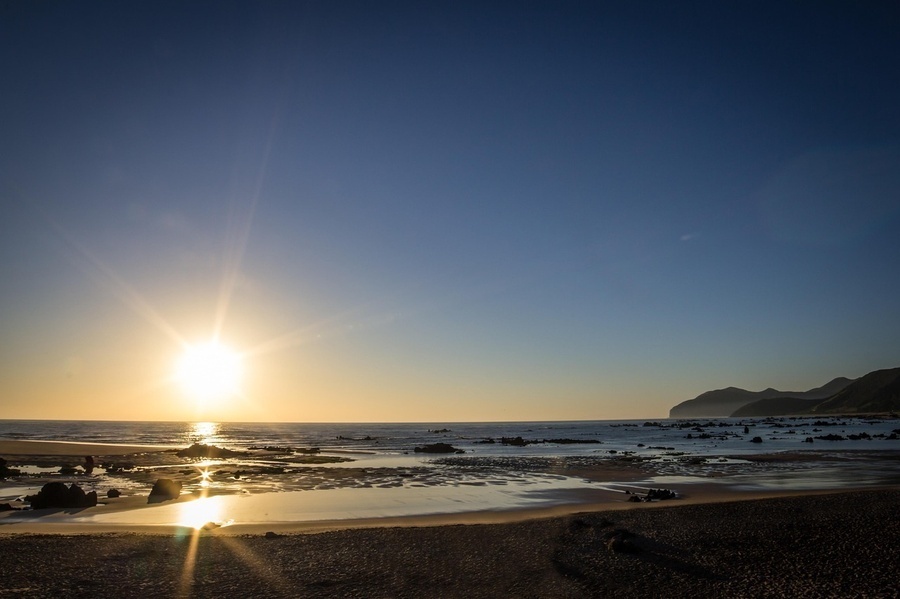
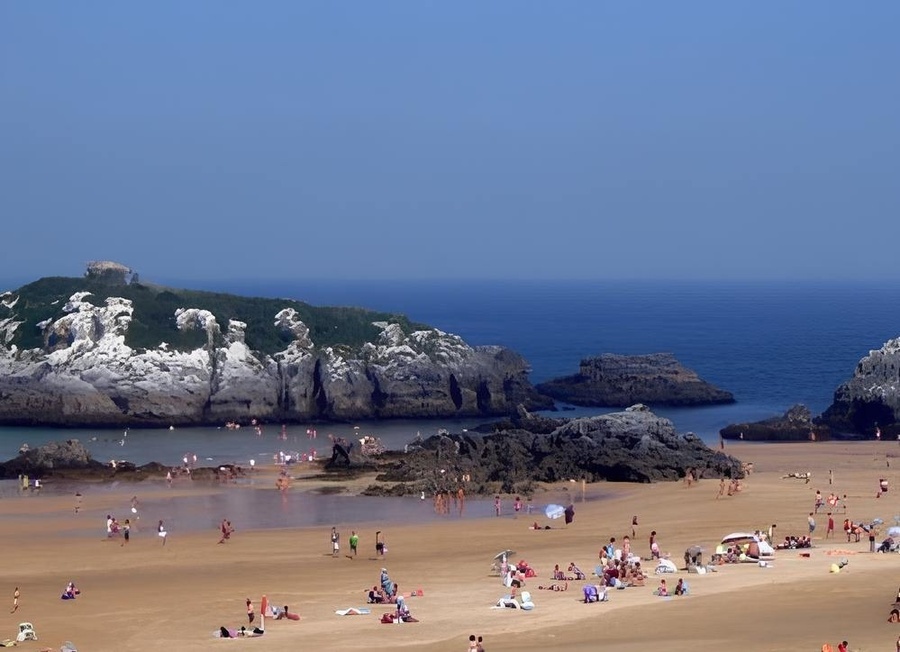
This vast, sandy beach is nearly 4 and a half kilometres long. It faces northeast, which makes its waters calmer than other beaches facing north or northwest. Low tide leaves an interesting landscape of karst rocks. Its changing tidal landscape makes this beach one of the most beautiful on the Cantabrian coast.
Hermitage of San Pedruco
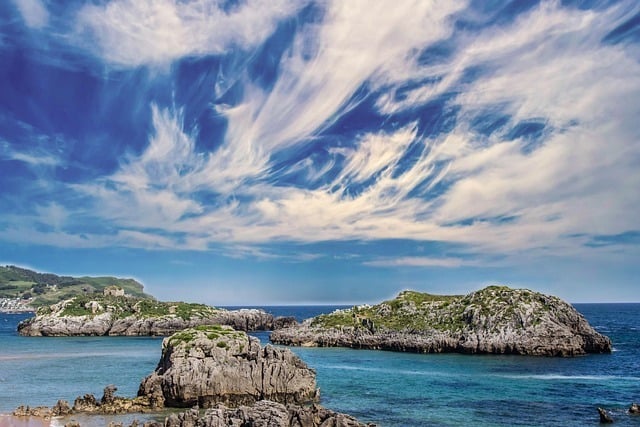
From the coast you can observe the remains of this shrine, situated on San Pedruco Island at Ris Beach. It previously housed the statue of the patron saint of San Pedro Church, which was transported from the island by boat on days of pilgrimage.
Today, San Pedruco Island is inhabited by seagulls, herons and egrets, and it can be accessed at low tide.
Church of St. Peter
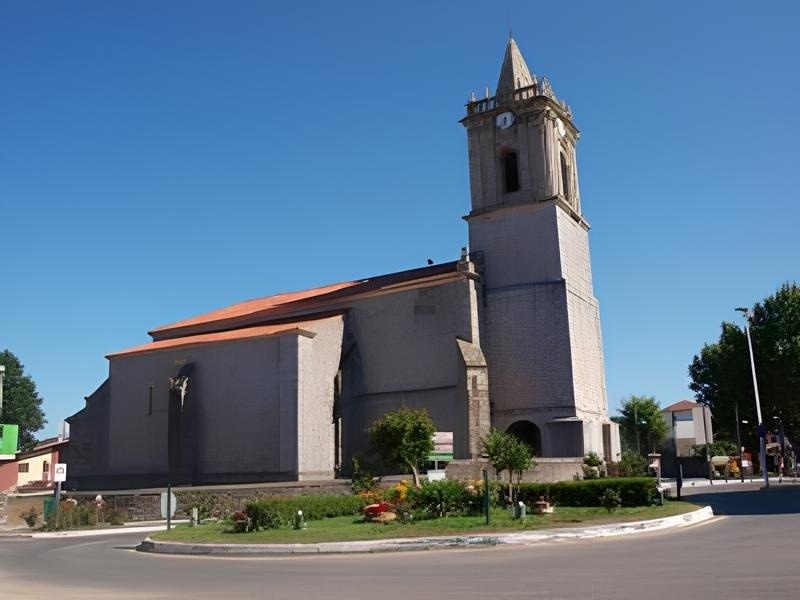
Located in the town square, this church has a Gothic tower that can be seen from afar. The chapel of the convent that surrounded the church can still be seen today. Inside there are three naves. The central nave is the largest and tallest and it contains a Baroque high altar over which presides the statue of the patron saint of the church. Beside the statue are San Emeterio and San Celedonio.
On 30 August there is a procession around the church accompanied by dancers and drums, and followed by the faithful. The left nave has a funerary monument with two praying statues.
El Palacio de los Marqueses de Albaicín
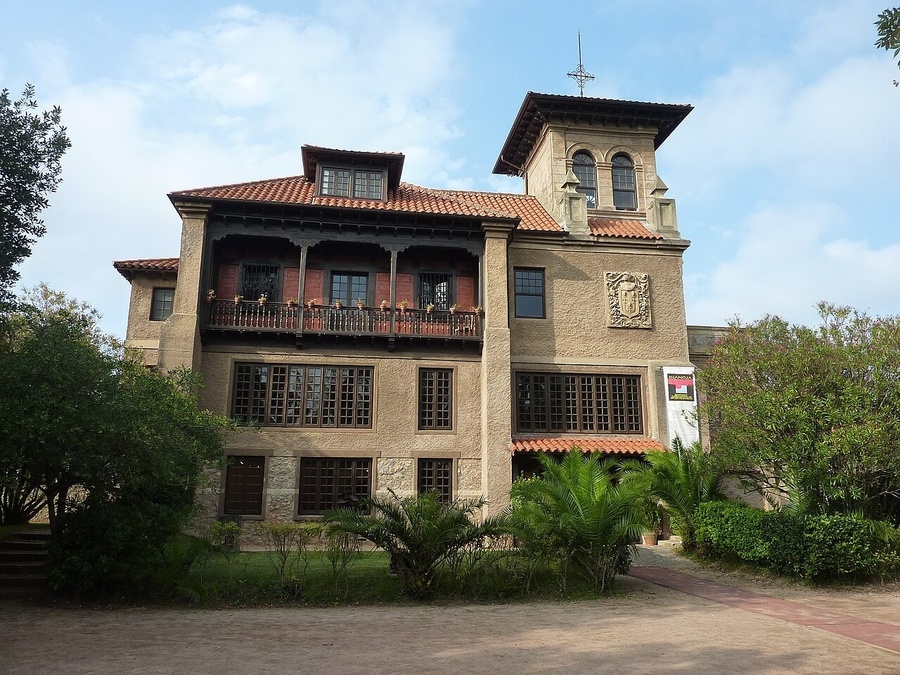
The majority of this construction dates back to the end of the 19th century and the beginning of the 20th. Its inspiration was Baroque-era mountain palaces. Some of this type of architecture's characteristic elements are: the hallway, a solarium between windbreakers, eaves and a shield in a preeminent place. However, it contains elements that invoke other historic styles: the geometric irregularity of the floor plan, slanted windows, the gallery, roof terrace, tower and attic. The palace is surrounded by a beautiful garden that has a collection of bonsai plants.
Today, this palace is the home of Noja's House of Culture where a large number of events, conferences and exhibitions are hosted.

Joyel Marshes
Located in the northwest corner of Noja, these marshlands cover an area of 250 hectares and are of great scenic and ornithological value. They form a part of the Marismas de Santoña y Noja Natural Park. The best way to observe their beauty is to walk the path that leads to the mill at Santa Olaja, which is currently the marshlands' visitor centre.
DISCOVER WHATS NEW Follow us and subscribe
Subscribe to our newsletter and follow us on Social Networks to be the first person to know all our news.
Thank you for subscribing to our newsletter